How To Create Biodata
Biodata, short for biographical data, is a document or form that summarizes key personal and professional details about an individual. It is often used in job applications, matrimonial profiles, or for official purposes. Below i have given a Example Format for How To Create Biodata
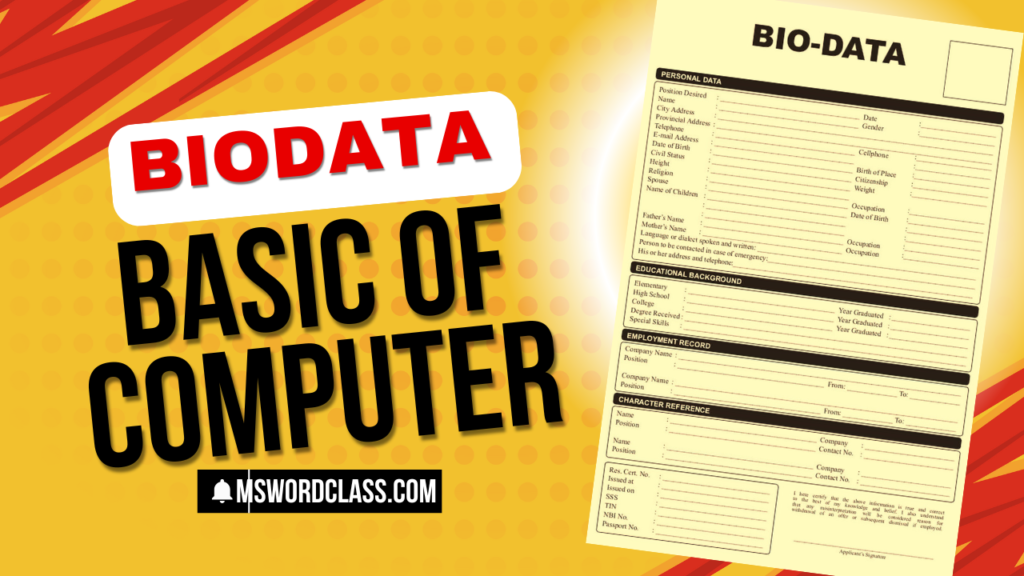
- Personal Information:
o Full name
o Date of birth
o Gender
o Address
o Contact information
o Marital status
o Nationality - Educational Qualifications:
o Academic records
o Institutions attended
o Certifications - Professional Details (if applicable):
o Work experience
o Skills and expertise
o Achievements - Hobbies (if applicable):
o Indoor Games
o Outdoor Games (Include specific Interest, likes) - Aim/Target/Goal:
o Want to Be
o Target to Be
It is typically short Details than a Résumé or CV (Curriculum vitae) and is tailored to specific cultural or regional requirements.
Use of Biodata
Importance of Biodata
Biodata is significant in various contexts because it provides a structured overview of a person’s background. Here’s why it is important:
1. Job Applications
- Initial Screening: Helps employers quickly assess a candidate’s qualifications and suitability for a role.
- Personalized Details: Unlike a résumé, biodata often includes additional personal information, helping employers gauge the candidate’s personality and background.
2. Matrimonial Purposes
- Family Insights: It includes personal and family details that are essential for matchmaking in many cultures.
- Compatibility Assessment: Helps families assess shared values, traditions, and expectations.
3. Official or Academic Records
- Formal Documentation: Required for government forms, scholarships, or admission processes.
- Ease of Verification: Organizes information systematically for quicker verification.
4. Organizational Use
- Employee Records: Used by companies to maintain personal and professional records of their employees.
- Cultural Fit: Helps employers understand a candidate’s personality traits and compatibility with the company culture.
5. Comprehensive Overview
- Multi-Purpose: Acts as a one-stop document for sharing personal and professional details.
- Customizable: Can be adapted to various purposes like job applications, personal introductions, or official submissions.
Conclusion
Biodata plays a critical role in presenting a concise and complete profile of an individual, making it valuable for both personal and professional uses.
MS Word VedantSri me seekhna chahte hain?
VedantSri Computer Institute, Varanasi — Durgakund aur Rathyatra, dono branch. Roz subah 7 se raat 8 baje tak khula.
WhatsApp · DurgakundWhatsApp · RathyatraSaare course, fees aur syllabus: VedantSri Varanasi
VedantSri par MS Word ka naya content
- Online Test for A To Z about Word Shortcuts Keys in 2026 | Test Series 5625Watch Video for A To Z about Word Shortcuts Keys Test Series 5626 | Top 50 Word Secret...
- MS Word Home Menu Online TestMS Word Home Menu Online Test Microsoft Word is an essential tool for anyone who works with documents....
- 50 Top MS Word Online Test, Quiz, Mock Exam 202650 Top MS Word Online Test, Quiz, Mock Exam 2026 Useful Link: -MS Word Course Details, Fees, Duration,...